There are really great CDs and names on here... but I'd just like to point out TWO of these to you. TWO from dDFW. TWO of your neighbors. Out of the whole world, we get TWO. Congrats!!
49th GRAMMY Entry List
Best Alternative Music Album, Vocal or Instrumental.
1. APOLLO SUNSHINE Apollo Sunshine
2. PEREGRINE The Appleseed Cast
3. WHATEVER PEOPLE SAY I AM, THAT'S WHAT I'M NOT Arctic Monkeys
4. BANG BANG ROCK & ROLL Art Brut
5. DOWN IN ALBION Babyshambles
6. EVERYTHING ALL THE TIME Band Of Horses
7. BE YOUR OWN PET Be Your Own Pet
8. THE LIFE PURSUIT Belle And Sebastian
9. BRIGHTBLACK MORNING LIGHT Brightblack Morning Light
10. DERDANG DERDANG Archie Bronson Outfit
11. YOU IN REVERSE Built To Spill
12. THIS CURSED HOUSE Canada
13. OF WHALES AND WOE Les Claypool
14. AVATAR Comets On Fire
15. CANSEI DE SER SEXY CSS
16. THE RUNNERS FOUR Deerhoof
17. DESTROYER'S RUBIES Destroyer
18. WATERLOO TO ANYWHERE Dirty Pretty Things
19. THE OUTSIDER DJ Shadow
20. YES, VIRGINIA... The Dresden Dolls
21. JOHN DUFILHO John Dufilho
22. THE BACK ROOM Editors
23. ELECTROPOLIS Electropolis
24. AT WAR WITH THE MYSTICS The Flaming Lips
25. TWO THOUSAND French Kicks
26. NEWS AND TRIBUTES The Futureheads
27. HEARTS AND UNICORNS Giant Drag
28. ST. ELSEWHERE Gnarls Barkley
29. JUST LIKE THE FAMBLY CAT Grandaddy
30. THE EXCHANGE SESSION VOL. 2 Kieran Hebden & Steve Reid
31. EMPIRE Kasabian
32. TING Seth Kauffman
33. ...UNTIL WE FELT RED Kaki King
34. PENTAGON Mat Maneri
35. AMPUTECHTURE The Mars Volta
36. AND THE GLASS HANDED KITES Mew
37. SO CLOSE TO BEAUTIFUL Open Door
38. FROM A COMPOUND EYE Robert Pollard
39. PIECES OF THE PEOPLE WE LOVE The Rapture
40. RED MONROE Red Monroe
41. DESCENDED LIKE VULTURES Rogue Wave
42. DIGITS Neil Rolnick
43. THE UNIFIED POUNDING THEORY Savage Aural Hotbed
44. THE LOON Tapes 'n Tapes
45. SUN OF WATER, SEA OF LIGHT Third Border
46. RETURN TO COOKIE MOUNTAIN TV On The Radio
47. SHOW YOUR BONES Yeah Yeah Yeahs
48. THE ERASER Thom Yorke
© NARAS 2006
Tuesday, November 14, 2006


Sunday, November 12, 2006
JB & CA @ Bend photos

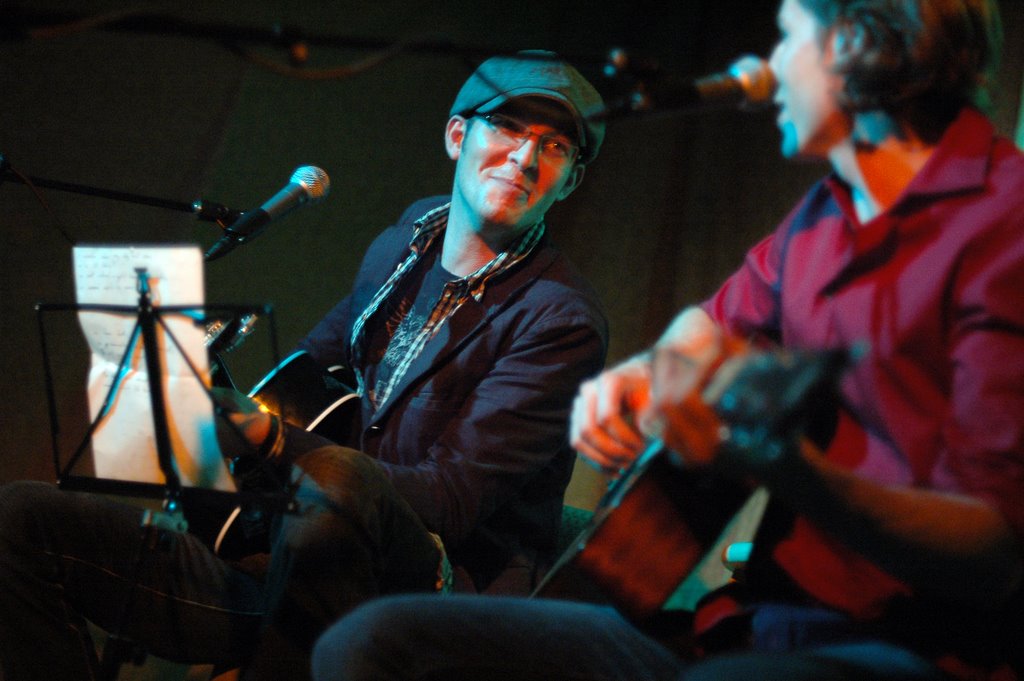
Jayson Bales and Carter Albrecht gave a wonderful performance at Bend. You can buy the CD of the show from Bend, and I highly recommend it. $20 and you'll get unreleased tracks from both musicians and some wry humor. Buy photos from me on my website. gracias.


Saturday, November 11, 2006
HO!HO!HO!
 ugh. It's just past Halloween. It's not even Thanksgiving yet. There should be a law against playing Christmas carols in stores before November 27th. Let's focus on being thankful first. Then we can polish up the chimneys.
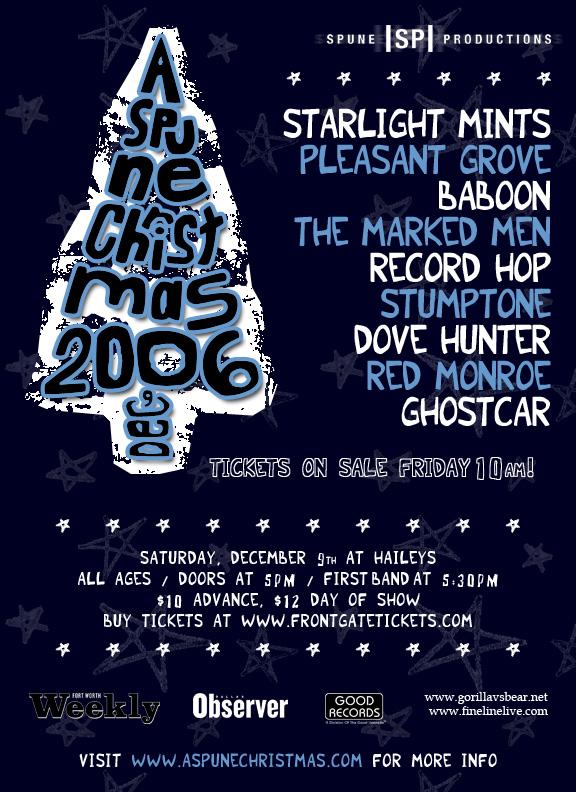
 But some things just can't wait. And this is one of them! Spread a little holiday cheer because, along with buying my Halloween eggnog (I kid you not), I've also signed up to do the "Rockstar Photography" (Mr. Yocom's phrase, not mine, though I protested very, very little) for A Spune Christmas.
Red Monroe! Record Hop! Baboon! Pleasant Grove! and some other bands that ought to be OK. heh. Starlight Mints. dude. He booked Starlight Mints. I'm so there.
so, Merry Xmas, and to all a good Dec 9th. Don't miss it.
Thursday, November 09, 2006
Show to go ... Jayson Bales and Carter Albrecht at Bend Studio 11/10

Jayson Bales (see review below) and Carter Albrecht will play tomorrow at Bend Studio. If reading that doesn't make your toes tingle, then you haven't spent much time at the Barley House. Barley is the hangout of a certain set of talented Dallas musicians. On any given night, you can go and hear Travis Hopper, JD Whittenburg, Sorta, Olopso, Jayson, Brent Best... it's the center of the roots/Americana scene. Plus Barley serves cider. I love a bar with Woodchuck. Hanging at Barley tends to be relaxed, really relaxed, as Richard, the owner, is high school buddies with a bunch of the musicians who play his bar. The sets there can get sloppy fun, so sloppy fun that even non-musicians have been known to end up singing on stage. (Not often, but it happens.)

But I digress, this isn't about Barley, it's about Bend and tomorrow's show. Jayson Bales and Carter Albrecht are staples of the scene. Carter is arguably (I'd argue it) the "best" musician in Dallas. He sings, plays keys, guitar, etc etc in what, a bazillion great bands? He's toured with Charlie Sexton. When the Edie Brickell's New Bohemians needed a member, they chose Carter. I missed Sparrows, the band Albrecht fronted, and I've heard great things. But usually in local shows Carter allows Trey Johnson or Chris Holt or Ms. Brickell center stage. On Friday at Bend, we're in for a treat: Carter Albrecht, up front. That's gonna be brilliant.
Ally David's epiphany to use her yoga studio as music venue is also brilliant. It's a music experience like none other in Dallas. It's a small space, with room for only 75 or so listeners. Shhh! No speaking; be quiet to hear legendary musicians such as Bob Schneider and Ian Moore, literally at their (bare) feet. Bring your own wine, stretch out on a serape, kick back, lose yourself in the music and personality of the artist. Wow.
Jayson and Carter will either put on a polished performance or crack under the pressure of the undivided attention. Either way, it'll be wonderful.
Bend Studio
Jayson Bales and Carter Albrecht
doors 7:30pm $10
BYOB & corking fee $3
don't be late and wear your good socks
Monday, November 06, 2006
Jayson Bales, Cruel and Unusual
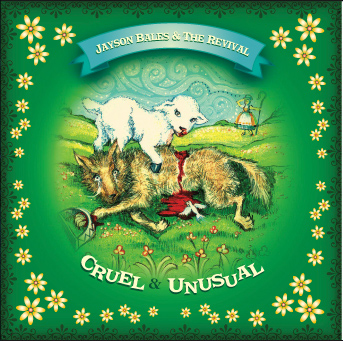 Jayson Bales is both a songwriter and a storyteller. Born, bred, and to the bone in Texas, he tells in music of his life, his state, and his country. His songs are fast fictions in which tales and truths are intertwined in melodic roots music. Introspective and retrospective on Cruel and Unusual, thirty-three year old Bales takes stock of his life, his family's influence, and America in 2006 and asks hard questions.
 Storm clouds brewing up ahead. Maybe it's the clouds, or lack of rest, but I don't know why I'm so damned depressed.
What Bales hasn't yet survived after a quarterlife crisis is heading straight for midlife crisis. A family man, a common man, Bales has bought wholly into the ideal of the American man. He takes a stand, he questions, and he searches his soul in three minute pop songs, as Woody Guthrie did, less than a generation ago. On "Half Right" Bales gives his due to the man willing to take a position.
"Some thought he fought a useless fight, but at least he took a stand,
that's gotta make him half right.
... the worst thing is not to stand for anything at all
... the truth may make you bleed but at least it'd be nice to know
... though you may not like what you find
... take a stand, you're gonna be half right."
Bales is willing to take that position, yet questions his own conviction.
"Everyday the colors turn grey. The black and white of my youth died just yesterday. You ask what I believe; I tell you I'm not sure."
Bales is both the beating heart of Texas - old school and family-centered, love God, love your fellow man, love your country - and the new mind of America. The tenets that have shaped his life are obvious. Though cynical about the present, he lives with the greater hope of God and heaven.
Friday, November 03, 2006
More new life for Deep Ellum
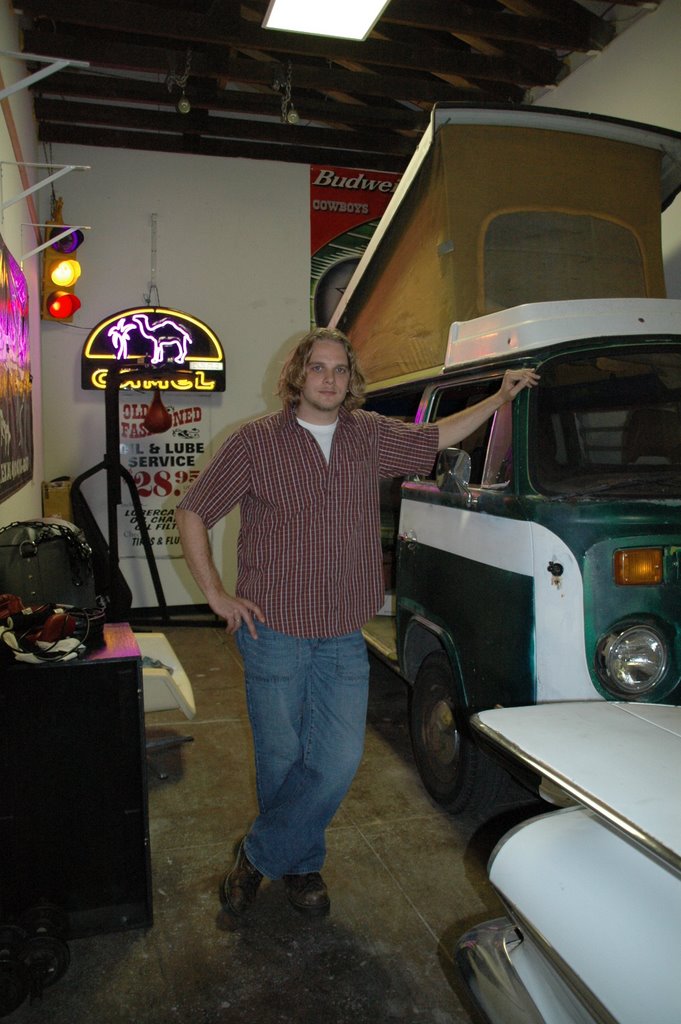
"There is a new wind blowing down the historic alleys of Deep Ellum. It whispers lightly in every new drum beat and distant vocal behind closed doors. It takes its pride in its name as it rolls off everyone's tongue. It whispers ... Copasectic Ballyhoo."
The press kit of a music movement in the old Last Beat Studio building waxes poetic, but behind the silver doors on Commerce Street is something as exciting as its prose is overblown. The gutted recording studio has new life inside. ProTools is once again running in the sound stage, the old production rooms are being converted into offices, design studios, and a bedroom. A bedroom? Copasectic Ballyhoo and co-founder Mat Timmons both live in the rooms that once recorded the Burden Brothers, Pinkston, and Vibrolux. He's planted grass on the tiny urban patio out back to remind him of the green of Arkansas, his birthplace. Timmons, unassuming, tall, and just a bit grunge, slouches casually through the facility, showing off what the rooms will be, soon. "Right now, it's an all-volunteer effort," he explains, opening the door to the bare graphics room. "It was set up a couple of weeks ago. We did have a designer, but he left," he says without animousity. Clearly, the future of Deep Ellum is not yet installed.
"The Movement" of Copasectic Ballyhoo is a collective of musicians and artists pioneering the newest genre-breaking music and art media, by their own definition. Their "kingdom of minds" promotes music the masses would never know existed. "We chose artists who have a unique sound or thought that can truely impact the world. I mean, you could teach me to be a guitar master of one song, but I couldn't expand beyond that," says Timmons. "These are artists that never play the same song twice; true musicians." Copasectic records extraordinary fusions unlikely to be fostered on any corporate label. So far, one project has been completed. The New Sounds of Deep Ellum, nicknamed S.O.D.E, is a compilation of exciting artists on the Dallas scene, and one reunited group, Jones. Jones had drifted apart, with members living in New York and LA.. They returned to Texas and began to work in the old Last Beat rehersal rooms. Two of their jazz songs are on S.O.D.E.. Saxmanran, inventor of the Rake, is on the compilation; Blunt Force Crew raps over a bluesy, lazy nearly alt-country melody; White Lotus Society brings on the experimental dance mixes. Juxtaposition and jumbling of musical styles in the rule, even within songs. Culture- and genre-blending experiences are Copasectic's grail.
The business of Copasectic Ballyhoo is a record label (the paperwork is in progress) along the lines of Virgin or Capital Records. Bands on the Copasectic roster can walk in with music and walk out with a fully produced, ready-to-market CD. Recording, graphics, photography, and video are done in-house. While the physical space isn't ready - isolation booth doors are still on order, couches and wet bars are just plans, the reception area needs serious drywall work and a desk - Timmons and his associates are laying a foundation. He and his friends, and his friends of friends, have set out to revive Deep Ellum and bring good music to the masses. "That calls my taste into question, doesn't it?" he jokes. Copasetic began with 150 core members; college friends of Timmons and co-founders Selvin deLeon and Chad Bruce. "We gave everyone five tickets to give out, then we gave those people five tickets, and so on and so on," laughs Timmons,"until we had a Christmas tree of associations. When we reached 600 members, we stopped. Now, we only invite in people who have been refered to us, and we've only grown by about 150 additional members since January."
Copasectic Ballyhoo isn't trying for exclusively by keeping close tabs on its membership list, but rather to gather like minds together. Its melting pot of cultures, races, and genres feels unique in Dallas. Its focus on positivity and inclusivity is refreshing and comes directly from the trauma of Timmon's own life. Sophomore year in college, his parents divorced, his health failed badly, and his true love cheated on him. Timmons' whole life collapsed. Standing on the ledge of his third-floor dorm room's window, aiming for his own car's roof below, he remembered his mother waking him with a song and smiled. It was enough to keep him alive. "One smile saved me, and my entire life's purpose is to produce genuine smiles because they have the power to change the world." Timmons, with his friends, wants to get Dallas smiling. Copasectic Ballyhoo is how he's gonna do that.
"We want to take the grassroots and plant them really solid," says Timmons. Not that there haven't been a couple of booking mistakes. For one of the earlier rooftop events, Timmons brought in Glass Intrepid to play. As soon as they went on stage, he realized his error. His friends made it clear that a mainstream, corporate band wasn't the right direction for Copasectic. Now he searches for artists with drive, those who work to fuel their creativity. "No trust fund babies are here," he says. To be welcomed into the collective, bands tryout on Thursday night rooftop parties, not only to showcase their music, but also to see if they fit into the family. The Artbar's rooftop is a perfect location, and the music flows out over Deep Ellum and draws in walk-up traffic. "Our first winter we lost the rooftop - it was too cold - then we were allowed to take over the stage at Clearview, but only after midnight. We finally opened the doors of the Blind Lemon. We were down to about twenty or thirty people, but the Movement survived." Copasectic hopes to not only pioneer genre-bending music, but to breathe new life into Deep Ellum by bringing back culture-loving crowds. Worried that crime will seep back into the district with the upcoming end of the recent police saturation, Timmons thinks "the crowds will be either be herds of cows or lions. Give me cows."
Timmons envisions spreading the smiles past Dallas, to Austin and Houston. He wants to take the music on the road for college tours in the sping and fall. And he wants univeristies to pay for it. "Imagine the students receiving free tickets; the good feelings, the smiles. We would come on campus, a cultural experience, sponsored by the college." If his dream sounds a bit Sixties-inspired, Timmons thinks that's fine. "Copasectic Ballyhoo is something so beautiful and non-conforming that it takes over your mind and soul."
Thursday, November 02, 2006
Photos and a PodQast

The past two weeks I have been working on a special set of photos. I set up my "studio" (I kicked the cars out of the garage) and my portable, loveable background, and invited some friends over. They primped (not so much) and posed (a whole lot) and generally either sweated or froze, but we all enjoyed the fun. And some really great photos came out of the experience. Red Monroe has already used theirs for a Quick PodQast, on which you can *cringe* hear me gushing and trying to act like I'm not just sitting in the British Rose chatting up my friends. Cindy Chaffin got me out of the woodwork to do this interview with her. We've only been planning it for a year. I'm glad that RM's nomination for a Grammy nomination finally got us in front of a mic.
Tuesday, October 24, 2006
Honeybuggy
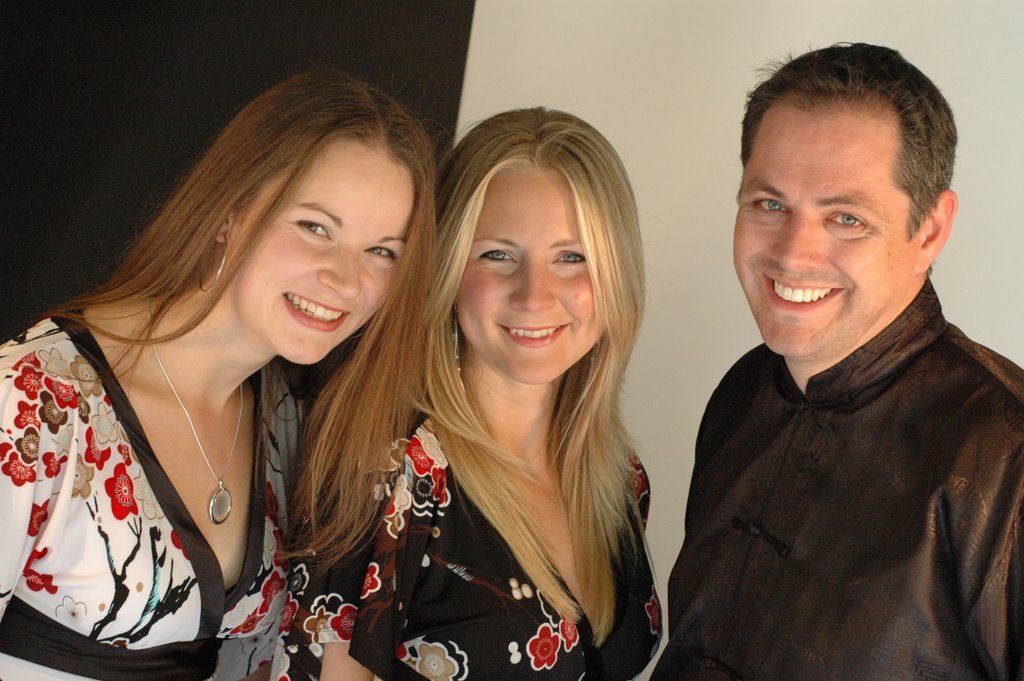
Andy Zipf; earnestwhile singersongwriter plays Absinthe tonight
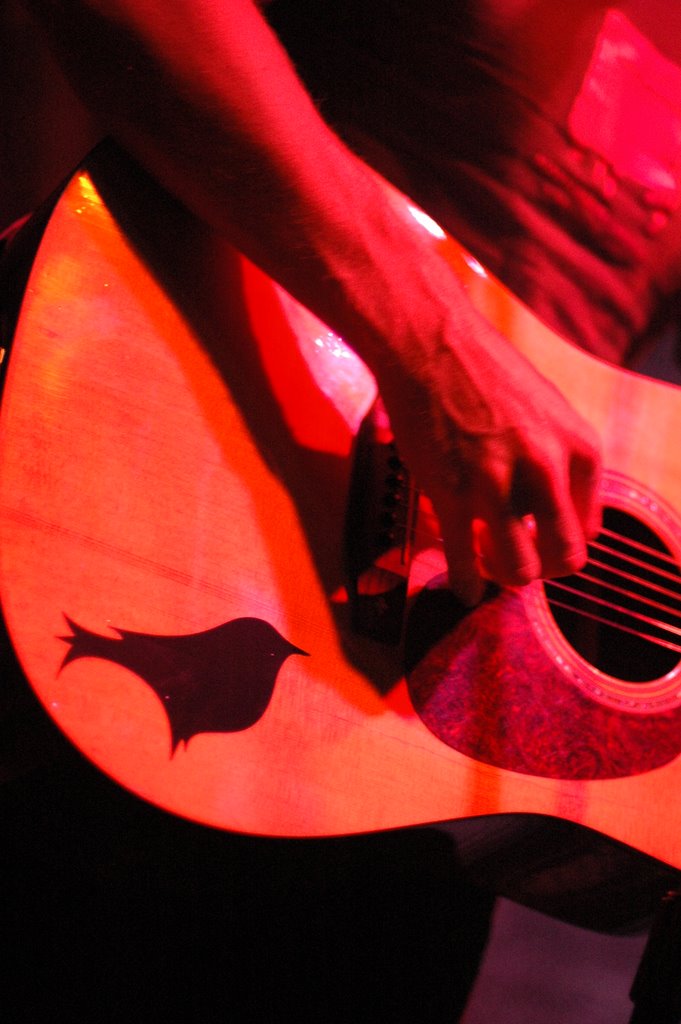
I met Andy Zipf a couple of months back as a friend of a friend while he was touring out to LA to record his new CD. He played Highlands Cafe and gave a brilliant show. Tonight he's at Absinthe Lounge. It's Tuesday night in Dallas. Carlin has Dada booked, White Rock Coffee has open mic, Standard and Pours has open mic, so... I'm drawing a blank as to other venues that have reasonable Tuesday nights. Or anything on Tuesday night.
Here's a YouTube of him playing. I hate this YouTube. It's crappy. He sounds nothing like this. OK, he might sound a little like this. But much, much better. Yup, he's that kind of singer/songwriter. Earnest, means his songs, serious.
At Highlands he played a good hour of not-quite-Christian, but you could hear the influences acoustic songs, then he broke into blues (I don't mean blues-y folk songs. I mean Blues) and he blew away the audience and beat his guitar into submission. I sat open-mouthed. And then he played something else from his album and the brilliant interlude was over. I was like, "where did THAT come from?" He should do more of that, and less of this YouTube stuff. But both are worth your time on a Tuesday evening. Absinthe Lounge 9pm in Southside Lamar. You should come.
I'll be there after I finish up a press gang-up on Red Monroe at their super-secret practice bar tonight.
Monday, September 25, 2006
The Hourly Radio & Rolling Stone
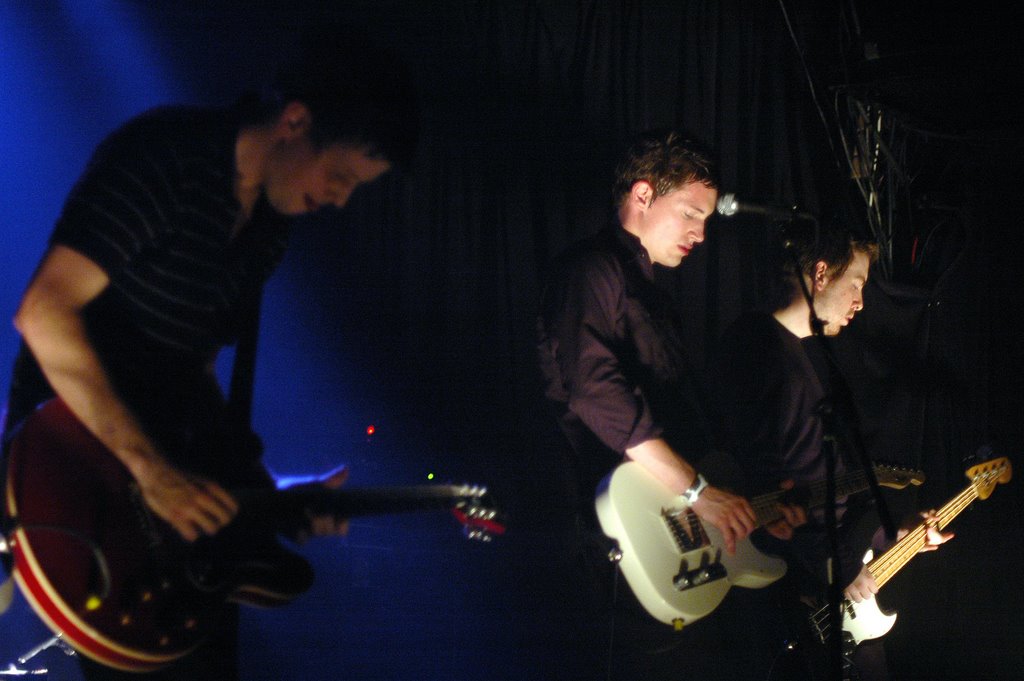
It's about time that Rolling Stone found the best Brit-pop band that's not British.
Check the issue with Jack Nicholson on the cover;
Editors' Top 5 picks.
damned right.
Thursday, September 21, 2006
How to write a record review
1. Don't become friends with the band.
It sucks to write about your friends. Especially if you thought Album One was brilliant, and Album Two, well, so isn't. And you will be accused of gladhanding your friends' work, implying that you have no objectivity. Yeah, well, you don't. And so what?
2. Write for the people who might buy the album.
Oh! Controversy! Why would you write a review of something you didn't like (and would never buy) unless your editor assigned it to you? Kill your ego and your tendency to pontificate. The world has changed. Amazon, TexasGigs, the band websites, myspaces, and downloading mean that listeners can easily weed out what they don't want to hear. Say something to those who will want to listen.
3. Allow your reader to form their own opinion.
You'd think this would be elementary.
4. Write a story.
Spin a tale, tell the reader who you are, what you think, why. Spin another tale about who the band is, what they think, why. Do it in 400 words or less.
5. The worst press is no press.
Hate it? Kill it. Say nothing. It's mightily effective. Of course, the temptation to ream is enticing. But that's all about you and not about them. You do get that, don't you? Leave it to those who have refined the artform and made a forum for it. You don't have the chops anyway.
It sucks to write about your friends. Especially if you thought Album One was brilliant, and Album Two, well, so isn't. And you will be accused of gladhanding your friends' work, implying that you have no objectivity. Yeah, well, you don't. And so what?
2. Write for the people who might buy the album.
Oh! Controversy! Why would you write a review of something you didn't like (and would never buy) unless your editor assigned it to you? Kill your ego and your tendency to pontificate. The world has changed. Amazon, TexasGigs, the band websites, myspaces, and downloading mean that listeners can easily weed out what they don't want to hear. Say something to those who will want to listen.
3. Allow your reader to form their own opinion.
You'd think this would be elementary.
4. Write a story.
Spin a tale, tell the reader who you are, what you think, why. Spin another tale about who the band is, what they think, why. Do it in 400 words or less.
5. The worst press is no press.
Hate it? Kill it. Say nothing. It's mightily effective. Of course, the temptation to ream is enticing. But that's all about you and not about them. You do get that, don't you? Leave it to those who have refined the artform and made a forum for it. You don't have the chops anyway.
Wednesday, September 20, 2006
Lousy Robot, Smile Like You’re Somewhere Else
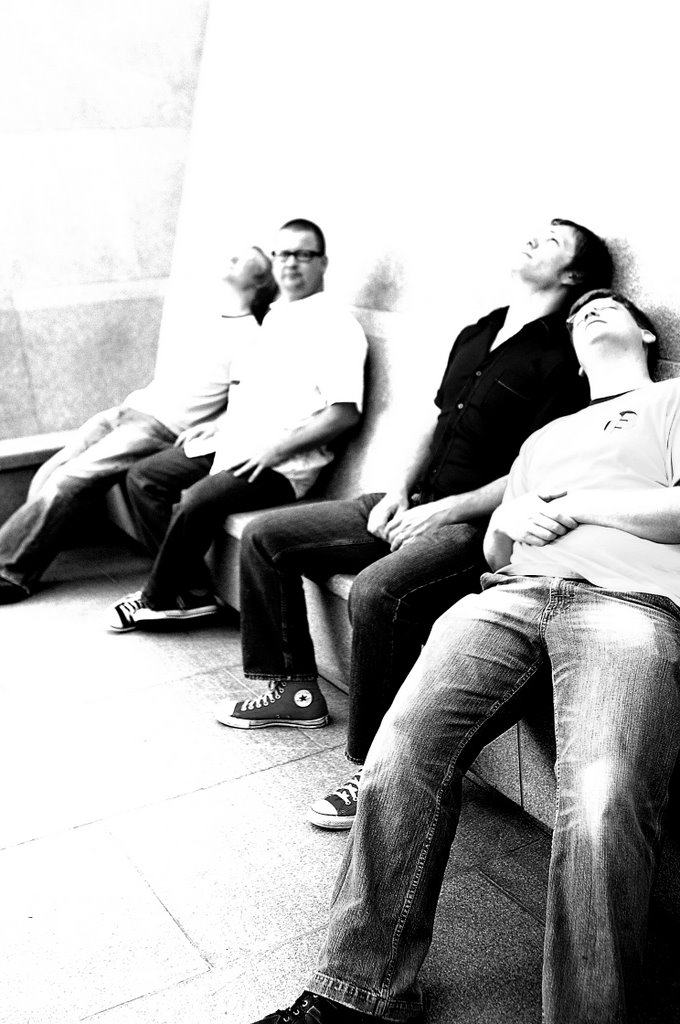
Smile Like You’re Somewhere Else
produced by John Dufilho, engineered by Salim Nourallah at Pleasantry Lane Studios in Dallas, TX.
Opening with a volley of Jet-like guitar and "yeahs!" and lapsing into the post-punk that defines the band, Smile Like You’re Somewhere Else is more, better Lousy Robot . A year of work under their belts, plus a renewed relationship with engineer Salim Nourallah and producer John Dufilho (Deathray Davies) have created another fun, danceable album. Having a bad day? Not quite happy with life? Pop in this CD, and adjust your groove. "Slower" is the dirge of the album until it slips quietly into a trancelike, swaying melody. Jack Moffitt adds moody, psychedelic keys to the pop. Jim Phillip’s concise and quirky lyrics take ordinary anxieties and make them universal and trifling. Channeling the Ramonesand early Beatles influences, Lousy Robot builds a sound that is both evocative and fresh. Contributions by Dallas heavy-hitters Johnny Lloyd Rollins, Cory Watson, (Black Tie Dynasty), John Lefler (Dashboard Confessional), and both Nourallah and Dufilho highlight the potential of this Albuquerque band. Not since The Shins left the Land of Enchantment has an unsigned quartet inspired collaboration of this caliber. Lousy Robot’s sophomore album is lusher than The Strange and True Story of Your Life and just as fun. Help me count the ways that I say, “Yeah!”
Song highlights: “Mr. Falls Apart,” “Help Me Count the Ways I Say ‘Yeah!’,” “A Way of Overstating.”
Tuesday, September 12, 2006
The Lord Henry, Zoo Palace
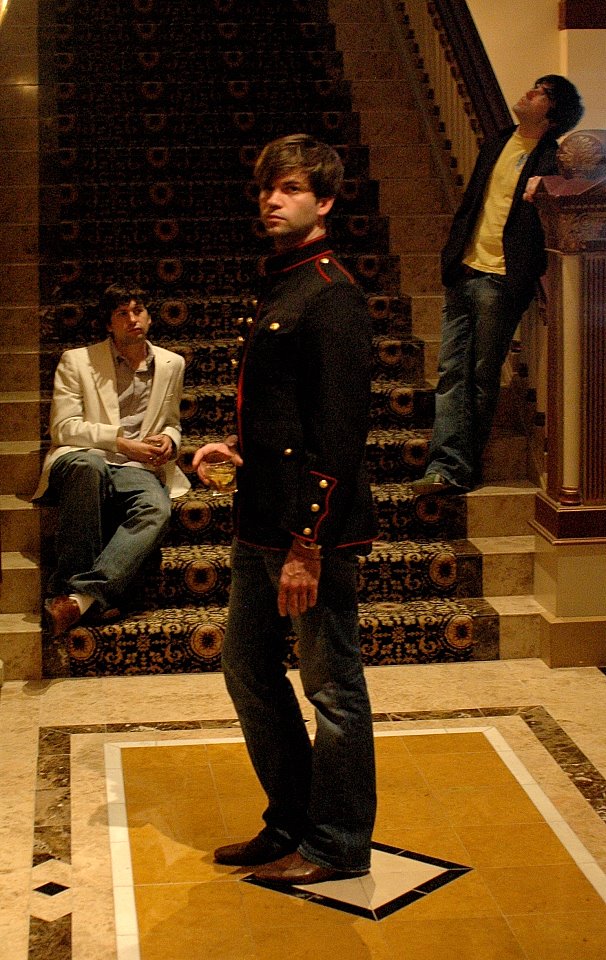 produced in part by Stuart Sikes, Bass Propulsion Labs, Dallas TX
Zoo Palace, the sophomore album of The Lord Henry, is in advance release and the show will be on October 21st here in Dallas. Sexy, sultry bad boys, TLH swagger, NYC style, up from Austin. Think Strokes, Louis XIV, and Brendan Benson.
Clinton Piper solos into the audience, titilating the prep school pretties of the front row. On his knees, close enough to touch, Piper's the alluring, pouty rock star. The songwriter of the band of brothers, Billy Potts, Grant Piper, and the latest addition, Josh from SanFran, Clinton's the lead and the emotion. Fast and furious on his guitar, he's ripped through his own fingers, blood spattering the strings, rather than slow down and grab a new pick. "Fire on 42nd Street" is the de riguer love song to New York, and "So So So" is remade from Voila.
Voila, the first EP, was a purposely analog and constrained album, meant to be performed live by just Piper on guitar and Potts drumming and singing backup. Zoo Palace though, is more expansive; The Lord Henry as a full, gorgeous band. Stuart Sikes (oh christ, just google him, his catalog is impressive) had a hand in about half the songs. The Lord Henry is frenzied guitars, over-the-top drumming, keys that fill your ears, and pure energy and sweat. They are the insane afterparty, but at the end of Zoo Palace, they slow down to quiet chilling. "Jilina," a beautful, raw Beatles-esque songlette, and "Loss of Love Says Hi" is Piper at his most vulnerable; the player taking stock. Potts even gets dreamy on "Loss of Love Says Hi" (love the title; beautiful and sad, like the song) with an edge of Sigur Ros-inspired drumming. Play these two on a hungover Sunday morning and they're brilliant, just skip past the first nine rockers until after the Bloody Marys have settled.
ArtCon 2006
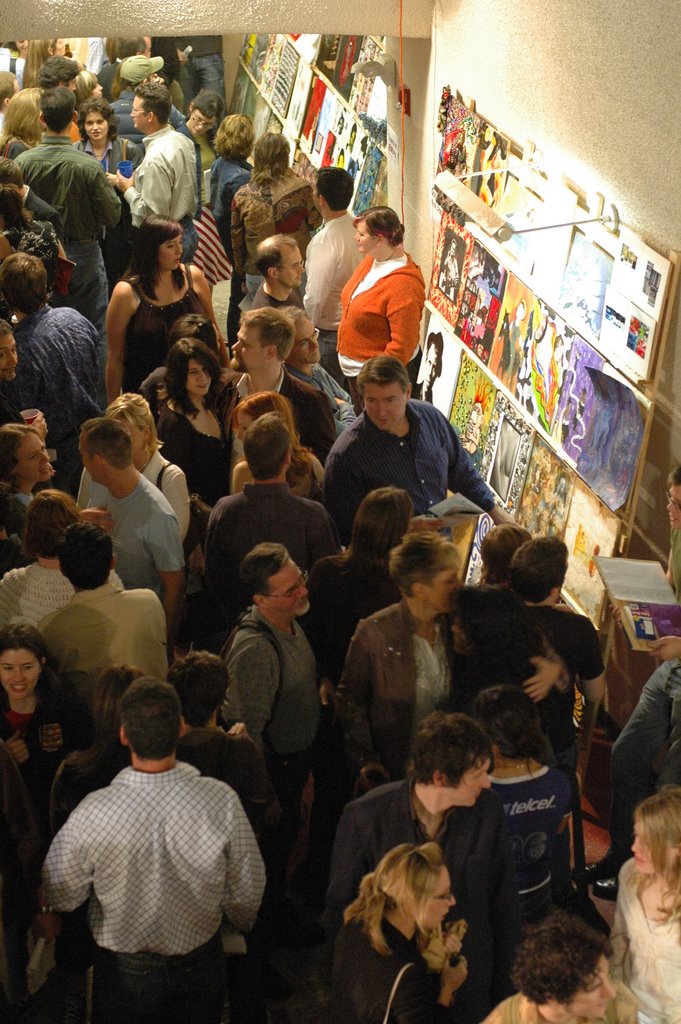
Art Conspiracy Dec 1&2 2006. Greatness. More later.
update: I'm participating. The art will be created on 11/30, and the show will be on 12/1.
Friday, September 08, 2006
The blog begins

Etheriousity begins as my personal blog about the people whom I know. It's a showcase for who they are and what we all are doing here. There is no meaning or "meta" here, it's more a random collection of souls bumping into each other, trying to do the least amount of damage possible. Even that poetic sentence is not mine.
I have friends who are brilliant, friends who are quite outspoken, and friends who are beautiful. My mother and I often have discussions about the meaning and connotation of the word "friend"; she believes it should only be used for life-long pals. I, however, come from a more transient era, and will extend it to mean "people with whom I wish to remain or become life-long pals." If you are of my mothers' ilk, please think "acquaintance" whenever I write "friend" - it would make her much more comfortable with us both.
Etheriousity is a made-up word, but it should be real. It adequately describes our transience. We move through each other's "realities" (another borrowed word), and peripherally impact thought and action in unexpected ways. I live as I wish, a rare priviledge, but choose to live as an example. Not only is that quite arrogant, but it also implies a spiritualism I generally don't achieve.
I am a photographer, occassionally a writer (though I haven't done enough of that lately), and was once a scientist. Yeah, I'm not gonna link that. You'll have to take my word for it. I love my local music scene, so this blog is mostly about the music and arts in Texas. Or rather, indie rock and photography in Dallas. I barely know any html, so if you are more technically savvy, please give me a snippet to learn how to do things. I learn quite well in snippets. I'm quite opposed to manuals. This is an interactive blog. If you want it to do other things, you'll need to teach me. I learn quickly.
Posts prior to 09.08.2006 are republished from various sources such as DallasMusicGuide.com and Venues Magazine, and have been written by me. All photos are mine, unless otherwise credited.
Please comment. Otherwise, I'd have spent my time writing a book, instead of speaking into the ether. And, welcome. I hope we meet in the concrete outside one day.
photo by Hal Samples... voted "Best Soul Glow" by the Dallas Observer 2006. You can see why.
Tuesday, June 13, 2006
Blogs and summer in Deep Ellum
Music in Dallas is as fickle as the weather. Or rather, should I say the online music press is? Just over two years ago, I wrote my first show review for DallasMusicGuide.com, and back then, Paul Salfen's site was about the best game in town. Torr Leonard brought me on as a writer. Then he left and formed his own blog, still one of the best from this city for everything Britpop-related. Cindy and I met each other at the rock shows we were both covering, and she blogged the interviews I wrote for DMG, which was incredibly cool of her. DMG was the site to read for local music news for about the next year, but then Paul sold a majority interest in the site to Rhapsody and the local content, well, kinda went away. By then though, Cindy and I had done a few interviews together at White Rock Coffee, and she had asked me to keep doing stuff with her. Garrison Reid began beating me out of interviews with national bands, which was cool, because his www.IndieInterviews.com is excellent. Out of the local podcast woodwork came dconstruction.org and upped the ante, challenging Cindy and I to gush over our fav musicians just a little less. Sadly, dconstruction has been awfully quiet as of late. When Cindy and I met Mike Orren of Pegasus News, he had a fantastic plan for TexasGigs: merge with his news site and be the end-all of local music sites. But Cindy's now here, at the Fine Line Live, and with a new partner, Amanda Newman. I hope to help them out a little. Amanda & Kim
That was really just a superlong preamble to saying that last Saturday at Club Dada was too much fun. Amanda has a great ear for bands and pulled together a solid line-up of four bands I hadn't yet seen live, and one that rawks! Olospo jams no matter what venue they play. The Jones thing, with Jeff Jones, Eric Neal, and Chris Holt ... brilliant! JJ and the Rogues, Handclaps and Harmonies, Eton Lake Tonic, and Sunday Drive? Never before had I even heard of them, but you can be sure I will keep up on them now. Great stuff.
Sunday Drive began in the bright light of a summer 7pm, and I even took off during their set just to walk around Deep Ellum in the daylight a bit. The band is just jazzy enough to be cool, yet energetic enough not to be boring.
I finally met the elusive (for me anyway) JD Whittenberg and had a pleasant time talking with him and John Solis (of Millicent Friendly and drummer for Johnny Lloyd Rollins) about playing across the pond in the UK. OK, John and JD talked about playing in England; I listened. JD's old band Trainwreck, with Greg Fontanillas and Bruce Johnson (now of Jayson Bales and The Revival), Rob Stave (Boys Named Sue), plus others will get together for a reunion show this Thursday at Dada. Don't miss this one-off show.
The lovely Camille Cortinas stopped by to lend support to friend Eric Neal of The Jones Thing and also Olospo. Chris Holt just happens to be in both of those bands as well. Surprise, surprise.
Handclaps and Harmonies wins as my fav band for the night. Not only were there seven of them in ice cream man white pants and shoes, but their music is also wonderfully fun. I bopped their to '60s-inspired sweet pop.
I must get over to Fort Worth more often (or ever), especially if bands such as JJ and the Rogues are hiding over there. Good music does exist on that side of the Trinity! Plus any band with a Julian Casablancas look-alike is alright by me.
I believe I caught the ghost of Dada on this photo, and he was dancing along as well. Check out behind the guy on the far left. It's freaking me out just a bit.
and last, a gratuitous photo of the lovely door person Kim, 'cause she's just so darn pretty and nice.
That was really just a superlong preamble to saying that last Saturday at Club Dada was too much fun. Amanda has a great ear for bands and pulled together a solid line-up of four bands I hadn't yet seen live, and one that rawks! Olospo jams no matter what venue they play. The Jones thing, with Jeff Jones, Eric Neal, and Chris Holt ... brilliant! JJ and the Rogues, Handclaps and Harmonies, Eton Lake Tonic, and Sunday Drive? Never before had I even heard of them, but you can be sure I will keep up on them now. Great stuff.
Sunday Drive began in the bright light of a summer 7pm, and I even took off during their set just to walk around Deep Ellum in the daylight a bit. The band is just jazzy enough to be cool, yet energetic enough not to be boring.
I finally met the elusive (for me anyway) JD Whittenberg and had a pleasant time talking with him and John Solis (of Millicent Friendly and drummer for Johnny Lloyd Rollins) about playing across the pond in the UK. OK, John and JD talked about playing in England; I listened. JD's old band Trainwreck, with Greg Fontanillas and Bruce Johnson (now of Jayson Bales and The Revival), Rob Stave (Boys Named Sue), plus others will get together for a reunion show this Thursday at Dada. Don't miss this one-off show.
The lovely Camille Cortinas stopped by to lend support to friend Eric Neal of The Jones Thing and also Olospo. Chris Holt just happens to be in both of those bands as well. Surprise, surprise.
Handclaps and Harmonies wins as my fav band for the night. Not only were there seven of them in ice cream man white pants and shoes, but their music is also wonderfully fun. I bopped their to '60s-inspired sweet pop.
I must get over to Fort Worth more often (or ever), especially if bands such as JJ and the Rogues are hiding over there. Good music does exist on that side of the Trinity! Plus any band with a Julian Casablancas look-alike is alright by me.
I believe I caught the ghost of Dada on this photo, and he was dancing along as well. Check out behind the guy on the far left. It's freaking me out just a bit.
and last, a gratuitous photo of the lovely door person Kim, 'cause she's just so darn pretty and nice.
Wednesday, February 22, 2006
Interview with Midlake
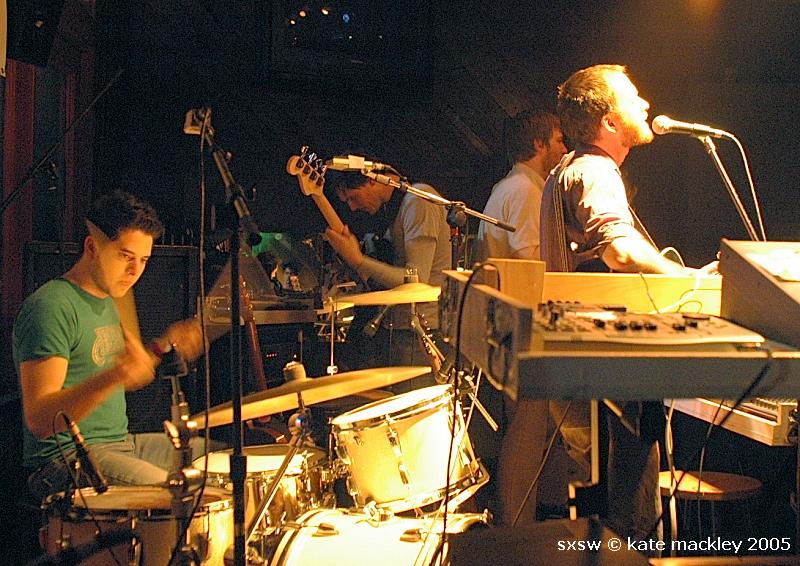
Midlake is experiencing enviable success. Tagged to play Coachella in 2005, chosen by actor Jason Lee for an appearance on The Late Late Show with Craig Ferguson, and ferried along for European tours by the Bella Union label of former Cocteau Twin Simon Raymonde and for American shows by Rilo Kiley, the Denton experimental rock band is fast becoming a media darling. Five indie guys with a bunch of artsy videos, Midlake spins spacey melodies that flow with grace and ease. Discussing the recording of their eagerly awaited third album, Midlake outlines a departure from the lo-fi, '60s inspired pop of Bamnan and Slivercork. Moving into the next decade of musical influences, The Trials of Van Occupanther draws from '70s folk rock and is a new direction for the ethereal group.
Eric Nichelson, Eric Pulido, and McKenzie Smith sat down with me for a lengthy interview this past June. As we munched tacos at Pepe's & Mito's on Dallas' Elm Street, we talked about how they've gotten better at recording and just how much I didn't really appreciate Bamnan and Slivercork.
Kate Mackley: Ok, first of all, tell me about Van Occupanther, how that’s going.
Eric Nicholson: It’s been a relatively long process again. We started in early November had an original plan of May to be done, and we got around earlier this year where we were doing pretty well, you know but this was going to take a little bit more time to complete. And so now we’ve given ourselves until November…
Eric Pulido: November of 2005.
EN: …to finish it up, and it’s going well. We’ve recorded six songs that are in, we're over 50% on two more; we’ll have to go back and add some things here and there in mix and stuff. It’ll probably be a ten or eleven song album so we’re probably 60-70% depending on how you look at it, so it’s getting there. And we’re looking at probably an early 2006 release, so it’s going well. We’ve been learning a lot as we record more, we record in our home and get new equipment and learn how or find out new things and so it’s been a good learning process. Frustrating, but good.
KM: Why frustrating?
EP: Learning how to record. We know how to record, but then we don’t know how to record… it’s probably a lot of the charm of our recording on our last album is that we really don’t know what we’re doing. So we just make it sound as best we can, and same thing with this album. We have a bunch of new gear and we’re having to learn how to use that gear, never having worked like this before. Just the learning curve, getting through that, and making it sound the best we can. We know what we like and we know what we like to hear, and getting it to actually happen is the difficult part, the frustrating part. That’s where the frustration is coming in but it’s nothing abnormal.
EP: Well, that’s why there are studios and producers and engineers. We always talk about “Man, it’d be great to just push a button and this guy would appear or this robot would come to life that’s like, "Yeah, you record that and make it sound like you know, Beatle’s “White Album” on this track and that’s what I want the guitar to sound like.” But it doesn’t happen, so we’re spending 75% of the time trying to get that sound. Playing the part wasn’t the hard thing; it was getting the sounds to sound right, so we keep getting these new toys and stuff to figure out. There’s a learning curve to employ those into the recording process. We don’t take a long time just because we’re trying to make people wait or we’re lazy or anything like that. I mean, we literally work 40 hour weeks [recording] on top of the 40 hours weeks we work at our jobs. It’s quite a process to get there, you know. It’s frustrating but fun.
KM: And why aren’t you guys using a studio or producer?
EN: Costs too much money. We buy the gear, pay the same amount of money to buy your own gear and learn how to use it. It’s a wiser investment. Cause you’re going to spend the exact same amount, if not more, on studio time. That’s all it is.
EP: And also, you can just go record whenever you want. Your studio’s right down the hall, you can go to your room, go take a nap, you can use your bathroom, you can go make coffee in your coffeemaker, you can go get a beer out of your refrigerator. You know, we’ve gotten so used to it now, it’s just comfortable. The only deterrent that was ever there was can we get the same quality that we would get? And we found that in a lot of ways it’s just as good or better because of the time. If there was an engineer behind it you’re going to get his input as well and you just kind of like lean on him and be like “OK, I trust that that’s good, right?” and you know, that’s cool, we got to move on now ‘cause time’s a wasting. But now it’s five of us in there and it’s like, “Is that good? Is that good? Is that good? I don’t know, let’s see.” It’s meticulous, and hopefully in all things we get to a point where the most important thing is this part of this sound. Sonically, does this song evoke, is there something emotional there that you can’t really put your finger on? So that’s the goal. Hopefully we’ll get that. We’ll let you know if we got that. Or you’ll let us know.
KM: The last album was a concept album, almost like a film, but audio. Is the next album going to be like that as well?
EN: Not as much.
EP: We’ll still have videos with the songs live. It won’t be as united as the last one of this land and balloons. There definitely was a conceptual idea behind the songs and they were tied together, whereas there are stories and such in the new songs, it’s just not as interconnected.
EN: These songs are definitely in the same world, the same vibe, as far as the sound of the songs. It’s definitely moved on to something different from our last album, but it still has a cohesiveness to it, but as far as the style of recording, it’s a little bit different. Though the style of songwriting, the vibe, is still there.
KM: Many bands, on their sophomore album, say, “We’re on a label, we’ll let them pick up the costs for us.” You guys aren’t doing that are you?
EN: No… (laughs)
EP: I mean, we’d like to, but there’s a lot that comes with that, you know. When the label gives you money, they also want to own it, they want to own everything, and a lot of what we’ve done has been our own way. Financially, funding things, it’s been difficult, but it’s kept things central, and we don’t have too many…
EN: ...outside influences.
EP: We made our album, we funded our album, and we own it. Bella Union licensed it from us and they do a 50/50 split with us on sales. If a big label over here wanted to give you a bunch of money, they’d say, “Well, I own the album now and you’re going to get 14% of the money that’s made on it, and anything else you put your name on I’m going to own too.” We don’t want to be big that bad, and there are no guarantees. Why can’t we continue doing things the way we are, where we’ve already recorded most of the album on our own dime, why don’t we keep finishing it out, and own it? There will be a label that’s willing to license it and let us still own our music and still get the music out there and get reviews and get features and get good shows. Slowly but surely we’re finding people that don’t make you give them your first born.
KM: Do you find that the music world is changing, because of the ability of the bands to do their own recordings?
EP: Oh, yeah.
EN: Yeah, it’s very viable nowadays. You can argue it’s going to take forever, but you can make a living, or potentially make money recording and making music.
EP: It's not like we just wrote a song, thought "it's great," and then recorded it. That’s not what happens.
EN:
McKenzie Smith joins us.
McKenzie Smith: The filter which it passes through now is just that much greater. I mean we literally compare everything we do to something that’s been done, that’s been great before. You have the task of finding something that doesn’t sound exactly like somebody else. If it does sound exactly like somebody else, then you hope that it’s something that nobody really listens to anymore or cares about, (laughs) but it’s almost impossible to find something entirely new. The other thing is, you don’t want to find anything that’s too creative and too bizarre that doesn’t connect with people. The filter is just getting smaller and smaller; that chance of going in there and sticking to what you actually want to do. Several years ago, before we ever even recorded our first EP, we’d been a rock band recording, rehearsing and practicing every night, five hours a night, playing the songs. But that’s never really like recording; looking back and asking that is the best it can possibly be? Figuring out every creative aspect. We did that for a year and a half before we played our first show. [When we went] into a rented studio we knocked out 13 songs in the three hour block and did vocal overdub. We did all the songs in two and a half hours, and Tim was expected to run through all 13 songs and hopefully get a vocal down in one or two takes, maybe, and we ended up rushing. It was very thrown together. It’s possible; you can make a record that way. If we had another couple of days to really work on it and finish it, that could have very well been an album that was released. But then again, it probably wouldn’t have been the greatest work we ever could have done. Now we have the opportunity to spend every night doing it, going, "Is this really the best it could be?" It does take a very long time. There are still things that take longer than you expect and what if it doesn’t sound good when you’re recording it? The mike’s not in the right place, the EQ’s not right, and then an hour and a half later, you finally solve the problem. And then you come back to it and you’re like, it's not right. (shaking his head, laughing)
EP: We’ve done that with whole songs….
MS: When we first started recording back in late November [2004], we spent an entire month recording a song, the first song we were working on… We chunked everything; a whole month’s worth and started over. So…
EP: … that’s why it takes us so long to finish an album.
MS: But when we talk about it, we struggle with it as well, because you know, we want to get it done, too. We want to be done. We want to get on with starting to develop the videos more and play live and put an album out. Even though we’re just this little indie band from
EN: A long time…
MS: (laughs) It is a long time, but I mean it’s worth it.
EN: You always got to keep that long-term perspective. That’s the only reason we’re still doing it, that’s the only way we’ve got through. We have to be thinking five years, ten years, fifteen years down the road. That you’re going to do this with your life; this is what you do. Luckily, we’re all able to come to terms with that. We talk to people and they’re like how do you get everybody on the same page?
EP: It’s a miracle how we got together…
EN: Yeah, you don’t get everybody on the same page… it just has to happen.
KM: Things are really starting to come together for you guys.
EN: It’s all about perception. I mean can we really be honest here?
EP: You’re always wanting more. I remember when playing a show was the goal. Then traveling somewhere to play a show, then making a CD, and then it’s people buying our CD and then it’s a label? I remember when Lift to Experience was on Bella Union and we had talked to them like “It’d be awesome to be on Bella Union and be like on a real label and tour Europe” and we talked to them, and it was just cool. It was the epitome of coolness for a band to have someone working with you, funding things, and getting you out there. Then we got on Bella Union, and all of a sudden we had a label and then a booking agent, and then it’s a festival, what would that be like? And then each thing comes and you want to keep pushing it.
MS: And the next thing is like, oh, man, a paycheck (laughs).
EN: Yeah, we don’t make any money. What it looks like on the outside, is not really what you would think it would be, and for us it’s not even… no way.
MS: And before we sound like arrogant jerks, these things are awesome, these things we’ve had happen are really cool. We’re not going to pretend they’re not cool. We have really cool people that like our band, or we can play some really cool stuff, and we can do some really great things…
EP: I didn’t come off like that, did I?
MS: No, I’m just saying that it could be taken the wrong way; if you print right there that oh it’s all perception, then there’s a million bands out there going “Those jerks. We wish we could have a record label, we wish we could do that” and it’s great, we’re very grateful we have these things. But at the same time, it’s always…we continue to work hard, to the next level and we just…we’re trying to make a career, we haven’t just arrived. Just because we have these things in place we finally feel like we’re actually sort of at the beginning now, OK, now we’ve got everything together let’s go do it, you know, let’s go. If we can turn on a thousand, OK, a lot more than that…a hundred thousand people in the world to our music, that’s kind of the goal.
EP: If a hundred people here in
EN: Getting a record deal, that’s not even the beginning, really. That’s part of it. It’s so hard just to do that, and then when you get that, then you have to make that work and that’s even harder.
EP: I don’t know…it’s a different equation for different bands, but I think the biggest thing that we’ve done, or the two biggest things—I guess they work hand in hand—but we’ve gotten, we’ve built everything in a very meticulous, patient way of getting people involved and getting entities or whatever. You get a label, you get a booking agent, you get friends, people in the media, you know a part of it. If you’re all the while working on your music and trying to create beautiful music and people connect to that, then ultimately they’re going to help move things along as well. It’s very easy to just crap out something and then be like, OK, now we’ll make it big. You kind of get ahead of yourself and it doesn’t really go anywhere. You wonder where you went wrong.
KM: Let me ask you about this, because I don’t get Bamnan and Slivercork. But, clearly, I’m missing something. A lot of people really love that album. Let’s put it this way, I tried so hard to listen to it and I make it through about 30 seconds of each song, and I’m like OK, next. Tell me what it is that I’m not getting?
EP: That’s a hard one. You have to go back to when you were growing up, what kind of music you listened to. Maybe pop music wasn’t to your liking.
MS: It’s difficult because it’s a subjective thing with music. I mean, if I looked at all the music I liked, there’s not necessarily this correlation where “Oh, that’s why I like Neil Young, and that mixes with this band.” There’s no doubt that there is in our music, particularly Bamnan and Slivercork, a quality to it that’s a little left of center.
EP: There’s a good chunk of people in the world that can get that album and it connects and says something to them. The lyrics aren't “Oooo baby, I’m so sorry I left you, I need you in my life right now” which obviously connects with a lot of people. The majority of the world buys that kind of record because that’s what they want to hear. People that don’t listen to that stuff, who are a little more off-the-cuff or whatever, they still haven’t quite gone into the world that our singer, Tim Smith, stepped into. [Bamnan and Slivercork] will never reach as many people as we would have hoped or liked to impact. I think it could reach a lot more than it did, but I still think it would take probably a certain kind of person that would enjoy that, and it is weird. But it’s not any weirder to me than a Beatles album that came out when they had a different lyric tone. They became weird but what they wrote about and how they wrote about it was still able to connect with a large group of people, obviously, but they already had set up a massive fan base anyway, so people were willing to listen to it. If the “White Album” had been their first record, they might not have had the success that they did. A band who has gone down a strange path like that, at some point early on in their career they’ve had more of a commercial success…
KM: Yeah. Because The Beatles' initial albums really were a commercial success.
EP: Yeah, so because of that, it kind of let them do [the later albums]. On our album, there’s a lot of imagery, some of it is kind of childlike.
MS: Some people come home, from the office—they’ve had a hard day, some people actually like that they can put on something that can take them to a completely different place like that. Some people say, no I want something I can relate to right away that’s going to help me get through my day in a different kind of way. Some people don’t even listen to lyrics and all they care about is this kind of weird band I like with these catchy melodies, whatever. People like music for all reasons. But I think honestly that a problem we had on our first album was that it might feel disconnected to certain people. I feel like the last album has taken great strides in fixing that.
EP: And you will like it…you might not get it, but you will like it.
EN: I think this music is way more mature. I mean, this album is not going to be put on by your average 15-year-old girl that likes New Found Glory or whatever…
KM: Ashlee Simpson…
EN: (laughs) It’s not going to be that kind of album, we’re not that kind of band. This music…I think the next album…I think it’s for adults. I think it’s very mature music.
EP: An older market.
MS: The influence in this album is different than the first one. The first one, we were still heavily into bands like the Flaming Lips or Grandaddy or Mercury Rev where it was a little bit more like ooh, we’re sort of weird, or quirky, and let’s throw some weird sounds in there. This album has nothing to do with that. There’s nothing on this album like that. It’s mostly like: here’s some acoustic guitars, and here’s some pianos and here’s electric guitar. It’s influenced by Joni Mitchell and Neil Young and Tim’s getting way more into '70’s folk. The recording process is different, the sounds are much different, the album sounds a lot different from the first one, just sonically. And then the songs are a lot different from Bamnan and Slivercork. The songs on Van Occupanther will connect with people in a more personal way.
EN: It’s the emotional connection, probably, even for yourself personally. It’s wanting to feel a certain way when you listen to music… you want it, you know. Even for myself, driving a car, sticking in an entire album, it might not grip on me; that’s just not the way I want to feel. It’s different for everybody.
KM: You’re right. It is all a personal, emotional connection.
EP: So hopefully, you’ll connect more with the second one. That way at our next interview you’ll say “I loved it.”
KM: Are you at all worried that you’re going to lose anyone who liked the first album?
EN: Oh, we might.
EP: All twelve of them.
MS: We had conversations about that…talking about the direction.
EN: I think it’ll open us up to many more fans, though.
EP: It’s just difficult because anytime we ever talk about something like that; it’s so hard to be objective about yourselves. When we finished “Roscoe,” we were confident that it was a good song, that it felt good, but what are people going to think about this? How will they think it compares to Bamnan and Slivercork? We let the label hear it, and Jason [Lee] heard it, and they really dug it.
KM: But what if they hadn’t?
EP: It would have been interesting, I mean…
MS: Rerecord! (laughs)
EP: Right. Well, it wouldn’t have been bad. No, because we felt good about it. If we were, if we would have felt bad about it…. Let’s not talk about it. (laughs)
MS: We showed Simon, who’s always been our greatest supporter. He loves it, you know. I know he would shoot straight with us if he heard it and was like “Man, I’m kind of worried about the new album, I’m not really digging this” - he would have told us that. But instead he was like, literally, "This is the best song I’ve heard in I don’t know how long, I can’t tell you!" He was freaking out about it, you know.
EP: The standard is if we all can sit back and all of us individually feel really really good and 100% confident, then at that point it doesn’t matter, you know. And that song that was definitely the case. I mean, this is good…
EN: And I don’t know if they would have felt the same if that would have been the first song.
KM: Can you actually describe your music? The new music.
MS: I think we used to use this description on our last album, but I think it’s actually starting to fit better now: "Influenced by rock albums, classic bands."
KM: Such as?
MS: Madonna, Huey Lewis and the News (laughs). No, such as anything from the Kinks, the Beatles, especially now the folk music stuff like Joni Mitchell, anything from Simon and Garfunkel, James Taylor, anything that’s got folksy or classic artists. Fleetwood Mac, right now that’s huge. Or Jethro Tull, anything like that. You don’t want to record an album that sounds exactly like it was recorded in 1973, and then everyone shows up at a gig wearing a jacket that everyone wore in 1973, because I think that’s novelty, that’s a throwback. That’s what most bands do right now. This whole '80s thing is so out of hand right now. I’m laughing at bands that that’s their whole shtick, because you’re going to be done. It’s over. It’s already on the way out. The '80s revival was cool and fun, but it’s going to die again. We’re not trying to be a '70s band, a revival. We’re actually just really in love with a lot of the records and a feeling in that time period. We’re trying to recreate that. There was good songwriting going on back then, which is not really present now. The feel of those albums and the songwriting and the personalities and the depth of the songs—that’s what we’re influenced by.
KM: But none of you actually remember the '70s…
EP: We were in there for about eight months.
EN: Yeah, you’re right, but from history, from looking back, we had this idea in our heads that "hmm…I bet it was like this."
EP: If you listen to the albums from then compared to the albums today, it seems clear to us, that there’s something going on there that’s not going on here.
MS: I’ve been listening to Duran Duran, I’m not going to lie, I think they’re an incredible band and they actually wrote really good songs, a little bit corny sometimes, but these really big, strong singers, great songs, and they all played their instruments really well. It had a good feeling to it, and you don’t hear that now. A lot of modern rock sounds so fake to me. I hate being the guy who likes strictly vintage, that everything vintage is cool, but there is some truth to that. We don’t want to be some like, trendy throwback band like the Kings of Leon. I’m not trying to dog on them, but when you look at them and you see the album artwork and it’s written just like it was, it has a shtick to it, like that’s kind of the vibe of it. We’re not trying to come out and dust off these 1970s characters and sport these massive handlebar moustaches, we’re not trying to be something that’s fake, we’re trying to be guys now in 2005 who happen to love stuff that’s older, from the 70s or whatever, and trying to make an album that sounds current today. All we want to do is make an album, that when people open it up, they put it in the CD player and go, "this is great," and they love it. When they come home from work, they put it on, and when they’re at work they listen to it, and when they’re in a car on a road trip with their girlfriend, they’re listening to it. That’s all we want to do with our music; we don’t want to be like some novelty act or some kind of trendy thing.
EN: Does that describe our music? Music that has been influenced by classic bands, classic albums, but we live in 2005 so we’re trying to make something that’s current. We just happen to be influenced that kind of stuff.
EP: We have no choice who we’re influenced by…
EN: That probably tells you nothing…
MS: It’s hard to place yourself in a genre. It’s hard to put words to what your music is because of perception. All you can really say is what you listen to and what moves you and what you’re trying to create. The only way you can do that, unfortunately, is say “With this song we’d been listening to a lot of Neil Young and that’s how it came out on this one.”
EN: It seems like the more you talk about it, the stupider we sound.
EP: Like when people describe the last album, they’re always like lo-fi psychedelic pop and I don’t know how to put those words onto the first album, either.
MS: Well, it’s lo-fi because we recorded it at our house, we weren’t really trying to be lo-fi, psychedelic because we used some weird keyboard sounds, none of us are on drugs, especially Tim, for sure, the singer, he doesn’t do drugs. It’s not like he’s writing this on some big acid trip, so I guess we’re psychedelic lo-fi music, I guess.
EP: Good luck with that one.
After the interview, the Midlake men treated me to a preview of their one kinda-finished (at that time) song, "Roscoe." We crammed into Eric Pulido's summer-hot, racing-red Mini Cooper outside the Café Brazil in Deep Ellum and cranked the volume. I made a bootleg copy with my iPod, but I swore never, ever to let anyone hear it. I haven't. The Trials of Van Occupanther will be out soon, and a non-bootleg version of "Roscoe" is available to listen to right now. It's on a Bella Union sampler, and the guys aren't exactly happy with it, even yet, so they'd rather you wait for the real thing. But I have to say, I do love it. I think I'll get this new album.
Originally published on www.dallasmusicguide.com
Wednesday, February 08, 2006
Millicent Friendly, Downtime
Downtime, Millicent Friendly
Produced by Purple Pear Studios, mixed by Derek Taylor,
Song highlights: "You," "
Originally written for TexasGigs.com
Sunday, January 01, 2006
Best of 2005 for TexasGigs.com
Kate Mackley, Best of 2005
Everyone has their picks for the "Best of…" during the past year. Here are a few things that caught my attention.
2005 Albums That Ought to Pay My iPod Rent
Lousy Robot, The Strange and True Story of Your Life
The Hourly Radio, The Lure of the Underground, with my #1 Most Played track of 2005, "Fear of Standing Upright" (because of all those hours on the treadmill, I’m sure).
Happy Bullets, The Vice and Virtue Ministry
John Dufilho, I Remain, As Always, a Rabble Rouser from the Mountains
everything Cory Watson did this year.
My Mix CD 2005
with the songs my friends made sure I had:
"Apple Candy", Ben Lee, Awake Is The New Sleep
"Between Us", Brendan Benson, Alternative to Love
"Take It Easy", Bright Eyes, Digital Ash in a Digital Urn
"Confection", Mommy And Daddy, Fighting Style Killer Panda
"Finding Out True Love Is Blind", Louis XIV, The Best Little Secrets are Kept
"What League Am I In?", Michaelmas, Every Minute A Mystery (Comes With A Smile)
"The Skin Of My Yellow Country Teeth", Clap Your Hands Say Yeah, Clap Your Hands Say Yeah
"Dinner Bells", Wolf Parade, Apologies To The Queen Mary
and the ones I sent to them:
"On and On", Mission to the Sea, Red Light
"Badlands", Spitfire Tumbleweeds, King James Version
"One Day at a Time", Johnny Lloyd Rollins, Let's Be Poor Together
"Montreal", Salim Nourallah, Beautiful Noise
"Foreigner", Zapruder Sequence, EP
"Good Luck", Chris Holt, Summer Reverb
plus, of course, all the other albums mentioned here.
Best Synchronicity
Black Tie Dynasty and [DARYL] for Bloody Basin
Most Infectious Song
"Willow" by Millicent Friendly. and now it’s stuck in my head, again.
Best Show I Couldn’t Handle
Salim Nourallah @ Bend Studio – Salim, undiluted. I fled in tears.
Best Marathon I’d Run Again
Spune’s Wall of Sound @ Hailey’s
Best Sandwich I Ate During a Music Fest
Denton’s Sweetwater Café (around the corner from Hailey’s): shrimp, cheese, and bacon. See those extra pounds on my hips? Uh huh. yum.
Best Time That Was Over Too Soon
Trees, Club Dada, Highlands Cafe’s first season
Most Improved Club
The Cavern, duh.
Most Innovative and Freakin’ Great Idea, ever.
Bend Studio – the vibe, the art, the shoelessness
Best Thing That Began
Podcasts: yours & mine.
Most Interesting New Band on My Radar
Auto Escape
Most Interesting Personality
Scott Porter
Rocking My 2006
The Lord Henry – in the studio with Stuart Sikes and a new album. The Beatles meet The Strokes.
Au Revoir 2005! Can’t wait for 2006.
Everyone has their picks for the "Best of…" during the past year. Here are a few things that caught my attention.
2005 Albums That Ought to Pay My iPod Rent
Lousy Robot, The Strange and True Story of Your Life
The Hourly Radio, The Lure of the Underground, with my #1 Most Played track of 2005, "Fear of Standing Upright" (because of all those hours on the treadmill, I’m sure).
Happy Bullets, The Vice and Virtue Ministry
John Dufilho, I Remain, As Always, a Rabble Rouser from the Mountains
everything Cory Watson did this year.
My Mix CD 2005
with the songs my friends made sure I had:
"Apple Candy", Ben Lee, Awake Is The New Sleep
"Between Us", Brendan Benson, Alternative to Love
"Take It Easy", Bright Eyes, Digital Ash in a Digital Urn
"Confection", Mommy And Daddy, Fighting Style Killer Panda
"Finding Out True Love Is Blind", Louis XIV, The Best Little Secrets are Kept
"What League Am I In?", Michaelmas, Every Minute A Mystery (Comes With A Smile)
"The Skin Of My Yellow Country Teeth", Clap Your Hands Say Yeah, Clap Your Hands Say Yeah
"Dinner Bells", Wolf Parade, Apologies To The Queen Mary
and the ones I sent to them:
"On and On", Mission to the Sea, Red Light
"Badlands", Spitfire Tumbleweeds, King James Version
"One Day at a Time", Johnny Lloyd Rollins, Let's Be Poor Together
"Montreal", Salim Nourallah, Beautiful Noise
"Foreigner", Zapruder Sequence, EP
"Good Luck", Chris Holt, Summer Reverb
plus, of course, all the other albums mentioned here.
Best Synchronicity
Black Tie Dynasty and [DARYL] for Bloody Basin
Most Infectious Song
"Willow" by Millicent Friendly. and now it’s stuck in my head, again.
Best Show I Couldn’t Handle
Salim Nourallah @ Bend Studio – Salim, undiluted. I fled in tears.
Best Marathon I’d Run Again
Spune’s Wall of Sound @ Hailey’s
Best Sandwich I Ate During a Music Fest
Denton’s Sweetwater Café (around the corner from Hailey’s): shrimp, cheese, and bacon. See those extra pounds on my hips? Uh huh. yum.
Best Time That Was Over Too Soon
Trees, Club Dada, Highlands Cafe’s first season
Most Improved Club
The Cavern, duh.
Most Innovative and Freakin’ Great Idea, ever.
Bend Studio – the vibe, the art, the shoelessness
Best Thing That Began
Podcasts: yours & mine.
Most Interesting New Band on My Radar
Auto Escape
Most Interesting Personality
Scott Porter
Rocking My 2006
The Lord Henry – in the studio with Stuart Sikes and a new album. The Beatles meet The Strokes.
Au Revoir 2005! Can’t wait for 2006.
Tuesday, December 13, 2005
Being in a Band is Supposed to be Dumb; Lousy Robot
Lousy Robot Bio
“Being in a band is supposed to be dumb.” Don’t expect Lousy Robot to take their music too seriously. Jim Phillips, the self-described “cock-eyed optimist” doesn’t. The songwriter, he digs into the universal with his intimate lyrics. 2005’s The Strange and True Story of Your Life, Lousy Robot’s debut album, is a translation of a trying year into fun songs. “Enough of my personal life is already out there,” says Jim. Small talk becomes a cover for tragedy, a bad relationship is summed up in one word, “Gone,” the song that defines the Lousy Robot sound. Distilling sentiment down to its core is Jim’s genius, but the music is total fun that recalls the best of the Ramones and 80’s alternative rock.
“We’re one bong hit away from being a jam band.” That’s not exactly true. Jim and bassist Dandee Fleming, the founding partners of the band, are also a bit obsessive about their music. When it came time to record their first album, Dandee went out on a limb and emailed John Dufilho of the Deathray Davies, known for complex, danceable, fun tunes. John’s “happy chords” fit Lousy Robot’s pop-punk sound. John suggested they record with Salim Nourallah, a good friend who had a studio at his house. Not exactly the recommendation Jim and Dandee expected, they researched Pleasantry Lane Studio before signing on. “Oh, look, that’s a Rolling Stone article,” quipped Jim. Salim’s backyard recording sessions were definitely good enough for the perfectionist leanings of Lousy Robot. Salim and John now consider them good friends, and John even put it in black and white when he thanked Jim and Dandee on his solo album.
In 2003 Jim’s former band, “Hey Dandee!” morphed into Lousy Robot when Dandee joined the group, after which Jim said, “The name was kinda weird, so we changed it.” Lousy Robot’s completing members are Michael J. Fox, the latest, and hopefully last in a Spinal Tap-like succession of drummers, and Jack Moffitt, the keyboardist. Michael is a university-trained, Berlios-inspired, classical percussionist. Brought together by Jill, their hairdresser, Michael and Dandee found their personalities fit well. “I hadn’t been in a band since I was in college in
Just back from Pleasantry Lane Studio again, Lousy Robot’s still unnamed second album is nearly ready to go, and its expected release is in early 2006. “This time, it’s more rock, more driven,” says Dandee. With backup vocals by Johnny Lloyd Rollins and Cory Watson of Black Tie Dynasty, the next album is an amped-up progression from their first effort. If The Strange and True Story of Your Life is baby steps, the new CD is a good hard run at danceable rock. “The new album, touring, that’s what’s next,” says Jim, who recently left the corporate world to concentrate on the band without distractions. Jim’s urge to hold an audience and Dandee’s charisma put the band in firm running for a break out of the
Subscribe to:
Posts (Atom)